Smoke Taint Mitigation and Remediation

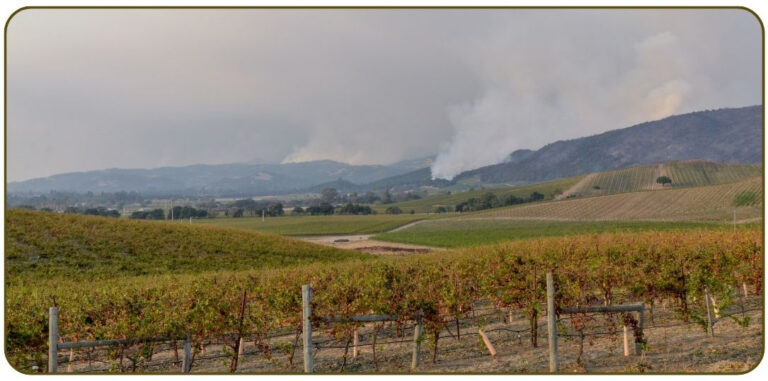
Wildfire smoke can create serious challenges for winemakers, but smoke exposure does not necessarily mean the fruit or finished wine is lost. There are steps that can be taken from harvest and processing through fermentation, aging, and finished wine to help minimize the impact of smoke-related compounds and reduce the perception of smoke taint. Because every lot is different, the most effective strategy may involve a combination of techniques. The following guidelines outline mitigation and remediation options to consider when smoke taint is a concern.

Mitigation

1. Harvest & Handling

1. Minimize damage to skins pre-press.

    • Hand harvest where possible
    • Harvest cold
    • Partially fill picking bins
    • Minimize travel time between vineyard and winery
    • Whole cluster press white grapes
    • Destem but do not crush red grapes
    • NO skin contact or pre-press maceration enzymes
    • Exclude “MOG” from the press/fermentation tank to minimize potential extraction from leaves and stems.

Note: washing the fruit is helpful to remove ash but will NOT impact extractable compounds in the berries.

2. Processing & Pressing

1. Treat with Flash Détente.

Studies have shown that reduction of smoke volatile phenols by flash détente can reach 50% or greater depending on the grapes and the specific protocols used, giving winemakers further flexibility in treating smoke-affected grapes.


2. Separate press fractions

Free-run has lower smoke compounds.


3. Conduct fining trials pre-fermentation with fining agents including:

• Deodorizing carbon at 0.5–3 g/L (4–25 lb/1000 gal) or higher

• Phenol-Fine Plus NF at 10–90 g/hL (0.8–7.5 lb/1000 gallons)

• PVPP

• Protein/Chitosan or Chitin-Glucan blends

• ClarMix at 0.1–0.25 g/L (0.8–2 lb/1000 gallons)

• Bentonite (added last to speed settling)

• In white juice:

• ClarPure at 0.4 g/L (3.3 lb/1000 gallons) and hyper-oxygenate the juice (min. 20 mg/L/day for 2–3 hours)

• Zyme-O-Clear Plus at 16 mL/ton

3. Fermentation

1. Select a robust and reliable yeast that emphasizes fruit and minimizes phenol production.

Examples: SafOEno™ CK S102, SafOEno™ FV 19, SafOEno™ HD A54, or SafOEno™ HD S 135


2. Minimize the potential of other off-character development by using proper nutrition from a yeast-derived nitrogen source to ensure a clean fermentation to dryness.

Wines that are fermented to complete dryness have significantly less potential of residual bound smoke precursors.


3. Minimize the maceration time of reds.

While threshold levels of free volatile phenols are present by day 3, minimizing maceration time will minimize the free and bound volatile phenols that must be remediated later.


4. Wine Quality

If you’re changing your normal winemaking approach to limit smoke extraction, think about how you’re going to preserve the wine’s structure and quality at the same time.

  • Consider tannins and/or oak chips.
  • Fermentation tannins and/or oak chips can help reduce the perception of smoke taint
  • In red fermentations, Color-Tan and Color-Tan NT will help with mouthfeel, balance and color stability, allowing shorter macerations (avoid tannin use in white fermentations).
  • Use untoasted or light-toast oak chips, as heavy toast characteristics might emphasize smoke taint.


Remediation

When choosing a remediation strategy for handling smoke taint, it is important to recall that not every treatment will be effective in a given wine, and it might require multiple techniques and possibly multiple applications of those techniques to significantly reduce the perception of smoke.

1. Reverse Osmosis

• Highly effective at removing free volatile phenols

• Not effective at removing bound volatile phenols, so smoke characteristics might return

• Sensory analysis of the wine is critical before and after treatment. Because MLF has a large sensory impact, any RO treatment should be considered 5–6 weeks after MLF is complete. Wines treated with reverse osmosis for smoke taint should NOT be barreled down. For oak complexity and palate resolution, consider tannins and/or oak blocks with micro-oxygenation in tank.

2. Fining

In addition to pre-fermentation fining, it might be necessary to fine during and after fermentation. Trials are always recommended. For mild smoke character, start with fining trials at 6 weeks post- MLF. For stronger smoke taint:

• End of Fermentation or ML:

1. Add ClarMix at up to 0.1 g/L (0.8 lb/1000 gallons) for 3 days.

2. Follow with ClarPure at up to 40 g/hL (3.3 lb/1000 gal) for 3–6 days contact.

3. Rack wine off fining lees.

• During aging (or beginning 6 weeks after the completion of MLF):

1. Add ClarPure at up to 40 g/hL (3.3 lb/1000 gallons) for up to 6 days.

2. Rack wine off fining lees.

• Finished Blend Fining

1. Add ClarMix at up to 0.1 g/hL (0.8 lb/1000 gal) for 3–6 days.

2. Follow with ClarPure at up to 40 g/hL (3.3 lb/1000 gal) for 48 hours contact.

3. Rack wine off fining lees.

3. Tannins & Oak Chips/Blocks

As with use in fermentation, certain tannins and oak chips or blocks might help reduce the perception of smoke taint. Trials are highly recommended, as certain options can actually increase smoke perception. Tannins that enhance fresh aromatics or increase complexity, such as Tannica Bouquet, Tannica Rosso, Tannica Lyon, or Tannica Fresco, might be helpful in reducing perception of smoke characteristics. For wines pressed early, Querca-Tan UT, Tani-Grape, Tani-Structure and Tani-Complete can help enhance a wine’s mouthfeel and structure.

 

ATPGroup’s team of experienced winemakers and enologists can help you design a smoke taint prevention program that fits your winemaking style, budget, and goals. For more information or trial samples, contact your ATPGroup Technical Representative or Enology Products Specialist or call (707) 836-6840.

Additional Winemaking Tips & Protocols:

Search by keyword:

See all

Tartrate Stability with CMC

Cool Summer Winemaking Tips

Tannins for Green Fruit

Yeast for the Modern Sparkling Wine (SafŒno™ SPK 05)

Smoke Taint

Cleaning & Sanitation for Dealcoholized Wines