
No- and Low-Alcohol Wine: A Four-Pillar Approach
Producing a low-alcohol or non-alcoholic wine involves more than just removing alcohol. It requires rebuilding the wine so that it retains balance, structure, and sensory appeal. When alcohol is removed, the wine loses much of its framework, including body, aromatic expression, and overall integration. To achieve a successful result, winemakers should focus on four key areas:

Managing Acidity:
Dealcoholization often concentrates organic acids, which can lead to lower pH and higher titratable acidity. Without alcohol to soften the perception, the wine can taste overly sharp and aggressive. To correct this, potassium carbonate or potassium bicarbonate can be used to neutralize excess tartaric acid. This adjustment helps raise pH slightly, reduce titratable acidity, and create a more balanced and approachable profile.
Restoring Mouthfeel and Body:
Alcohol contributes significantly to viscosity and mid-palate weight. Its removal can leave the wine feeling thin or hollow. Rebuilding texture is therefore essential to creating a more complete sensory experience. Several tools are commonly used for this purpose:
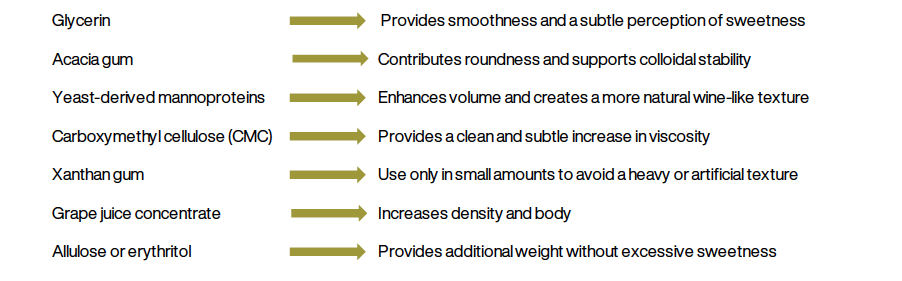
Rebuilding Aroma and Flavor:
Alcohol plays a central role in the perception and release of aroma compounds. During dealcoholization, many of these compounds are diminished or lost, resulting in a flatter sensory profile. To address this, exogenous tannins are often used to rebuild structure and enhance flavor. Depending on their origin, tannins can increase fruit expression, improve freshness, and contribute subtle oak or sweet notes. In addition, natural or artificial flavor components may be incorporated to restore aromatic complexity and overall balance.
Maintaining Color and Visual Appeal
The physical processes involved in dealcoholization can negatively affect color, particularly in red wines, which may lose vibrancy and shift toward brown tones.
Stabilizing agents such as acacia gum can help protect the wine’s natural color, while approved color additions may be used when further adjustment is needed. Maintaining an appealing visual profile is an important part of the overall perception of quality.
Role of Grape Concentrate
Grape juice concentrate is often one of the most versatile tools in dealcoholized wine production. By concentrating the natural components of grape juice, it contributes to body, sweetness, flavor, and color simultaneously. Concentrates may be generic or varietal-specific, allowing winemakers to tailor the final profile more precisely.
Regulatory Considerations
In the United States, non-alcoholic wine is regulated by the Food and Drug Administration rather than the Alcohol and Tobacco Tax and Trade Bureau. This distinction provides greater flexibility in ingredient use compared to traditional wine. However, these products are regulated as beverages and must include ingredient statements and nutrition labeling. Winemakers should ensure that all components used are compliant with applicable FDA guidelines.
Dealcoholized wine production is best approached as a process of reconstruction. By carefully adjusting acidity, rebuilding mouthfeel, restoring aroma and flavor, and stabilizing color, winemakers can create non-alcoholic wines that retain balance, structure, and drinkability. ATPGroup offers a full range of winemaking solutions that can be used throughout the dealcoholization process.
For more information or for help getting started or troubleshooting your dealcoholization process, contact your ATPGroup Enology Products Specialist or call (707) 836-6840.